









Video production is the comprehensive process of creating video content from the initial concept to the final output. It encompasses all stages of production, including discovery, planning, scripting, filming, editing, and distribution. This transformative process involves turning ideas and messages into compelling visual narratives that effectively communicate with a target audience. In the context of a digital marketing company, video production serves as a powerful tool to engage audiences, promote brands, explain products or services, and drive conversions across various digital platforms. By crafting visually appealing and emotionally resonant content, businesses can connect with their audience on a deeper level, enhancing brand awareness and loyalty.

Producing videos for a wide range of diverse business needs and target audiences.

Starting with brainstorming, development, and scripting. End with post-production, distribution, and monitoring.

Creating engaging video content designed for social media platforms like Instagram, Facebook, and TikTok.

Compelling commercials to captivate TV and streaming audiences.

Optimizing videos for various platforms and distributing them.

Measuring success and guiding future strategy. .
Video production is important because it enables businesses to communicate their messages more effectively through engaging and dynamic content made by professionals. High-quality videos capture attention quickly, convey complex information in an easily digestible format, and evoke emotions that can influence viewer behavior. In the realm of digital marketing, video content provides a more immersive and interactive experience than text or images alone. Additionally, videos are highly shareable across social media platforms, extending their reach and amplifying the impact of marketing campaigns. Investing in professional video production, including the use of excellent film equipment, helps businesses stand out in a crowded marketplace, connect with their target audience on a deeper level, and achieve their marketing objectives more efficiently.
The video production process transforms an idea into a compelling visual story through three key stages: pre-production, production, and post-production. In the pre-production phase, planning and preparation are paramount. This stage includes concept development, where ideas are fleshed out and objectives are set, as well as scripting and organizing resources such as talent, locations, and equipment. The production phase is where the actual filming occurs, capturing footage and audio that align with the project’s vision. High-quality equipment plays a crucial role here, so that the visuals and sound are captured with clarity and precision. Finally, post-production involves editing the footage, adding graphics, effects, and sound design, and finalizing the video for distribution. This structured approach allows for the creation of high-quality video content that effectively communicates your message and engages your target audience.
The stages of video production consist of three main phases:

Pre-Production is the planning phase, where ideas are developed into a workable plan. This includes concept development, scripting, storyboarding, budgeting, scheduling, and organizing resources such as locations, equipment, and talent. Attention to detail during this phase sets the foundation for a successful production.
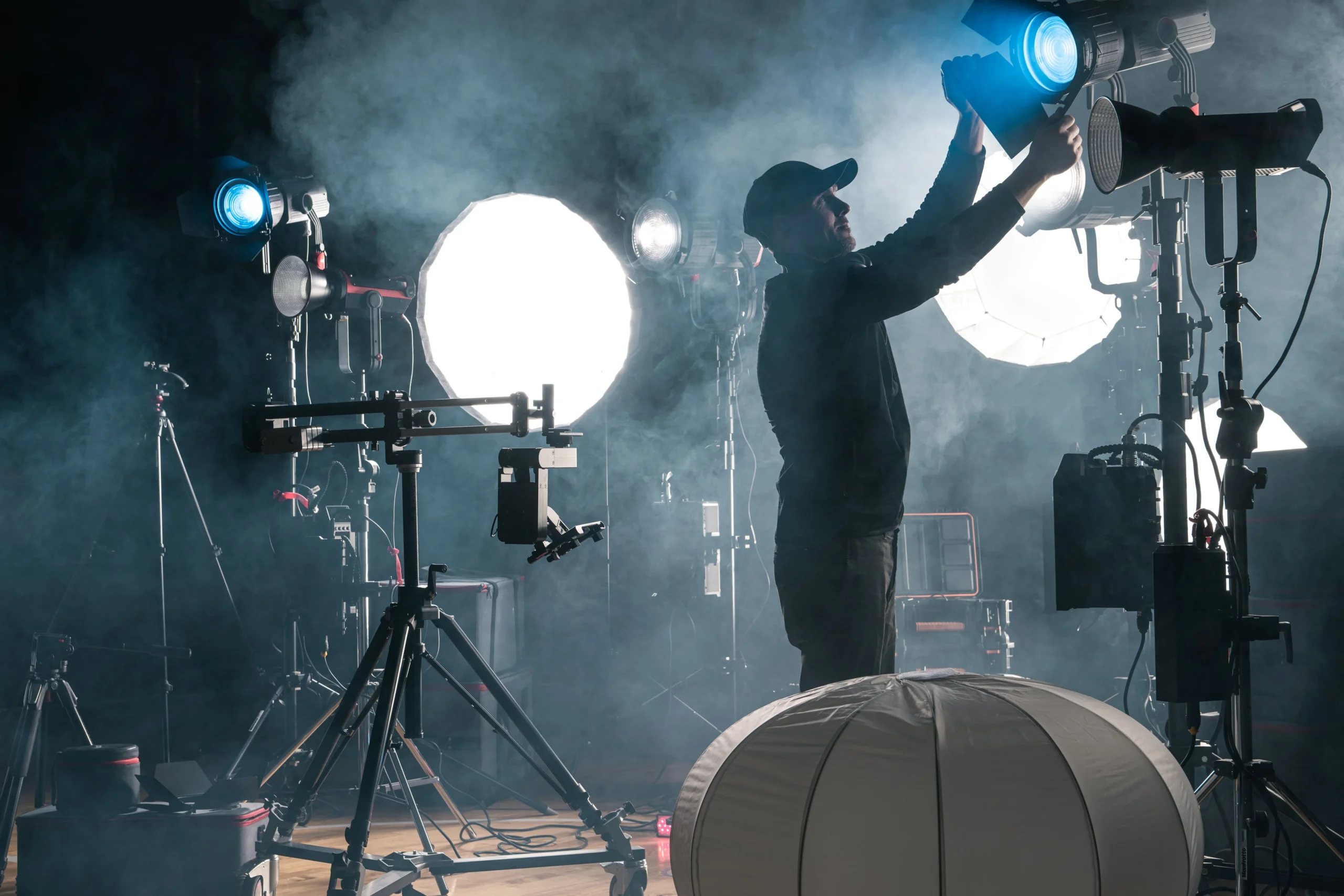
Production is the execution phase, where the actual filming or recording takes place. During this stage, the crew captures all the required footage and audio using cameras, lighting, and sound equipment as outlined in the pre-production plan. The use of high-quality film equipment is essential here, as it makes sure that the visual and audio elements meet professional standards.
Post-Production is the final phase that involves editing the captured footage, adding visual effects, graphics, music, and sound design. This stage also includes color grading and preparing the final video for distribution across various platforms. The careful refinement of the content during post-production guarantees that the final video effectively communicates your message and resonates with your target audience.
Understanding these stages creates a smooth workflow and results in high-quality video content that effectively communicates your message and engages your target audience.
Video production includes all the aspects involved in creating a video. This includes more than just the process of pre-production, production, and post-production. It includes sourcing equipment, scheduling the work, including shooting, and distributing the video. The importance of using excellent film equipment cannot be overstated, as it significantly impacts the quality of the final product. In the context of a digital marketing company, video production also involves distributing and optimizing the video for various platforms so it aligns with marketing strategies, and preparing it for effective distribution to engage the target audience.
The duration of a video production varies widely based on factors like the project’s complexity, length, and scope. A simple video, such as a short promotional clip or social media post, might take a few days to a week to complete, including planning, filming, and editing. More complex productions—like corporate videos, commercials, or documentaries—can take several weeks to months, involving extensive pre-production planning, multiple shooting days, and detailed post-production work. The availability of resources, including access to high-quality equipment and skilled professionals, can also impact the timeline. Ultimately, the time frame depends on the specific requirements of the project, the efficiency of the production team, and the desired quality of the final product.
Video production encompasses various formats tailored to meet specific objectives and engage different audiences. The primary types include:
Understanding these types helps businesses select the most effective format to communicate their message and achieve their marketing goals. By choosing the right type of video production, companies can effectively engage their audience and convey their brand’s unique value proposition.

A good video possesses several key qualities: clear purpose, engaging content, high production quality, and effective storytelling. It should have a well-defined objective and convey a specific message tailored to its target audience. Engaging content is crucial to capture and retain viewers’ attention, achieved through compelling narratives, relatable subjects, or emotional appeal. High production quality involves sharp visuals, proper lighting, clear audio, and professional editing, all of which are enhanced by the use of excellent film equipment. Effective storytelling makes sure the content is structured logically and delivered in a way that resonates with the audience, leaving a lasting impression and effectively communicating the intended message.
A good video typically comprises four essential elements:
01
The video should have a well-defined objective and convey a specific message tailored to its target audience, making sure that the content aligns with the overall goals. Clarity of purpose guides all aspects of production, from scripting to final edits.
02
Compelling storytelling or presentation is crucial to capture and retain the viewer’s attention. This includes a strong script, relatable characters or scenarios, and emotional appeal that resonates with the audience.
03
Professional visuals and sound are vital. This involves sharp imagery, proper lighting, clear audio, and appropriate use of graphics or animations to enhance the viewing experience. Utilizing excellent film equipment contributes significantly to achieving high production quality, as it guarantees that the technical aspects of the video meet professional standards.
04
Seamless editing brings all components together cohesively. It creates proper pacing, smooth transitions, and eliminates unnecessary content, resulting in a polished final product that holds the viewer’s interest.
By integrating these elements, a video can effectively communicate its message, resonate with the audience, and achieve its intended impact.

Videography primarily refers to the process of capturing moving images using video cameras; it focuses on the actual recording of events, scenes, or subjects. Videographers handle the camera work and may cover live events, documentaries, or other recordings. In contrast, video production encompasses the entire process of creating a video, including pre-production, post-production, and preparing the final product for distribution. Essentially, videography is a component of the broader video production process.

How Do You Know if a Video is Effective?
You can determine if a video is effective by measuring key performance indicators (KPIs) that align with your goals. These may include metrics like:
Analyzing these data points through analytical tools helps assess how well the video captures and maintains viewer attention, encourages interaction, and achieves its intended purpose, such as increasing brand awareness or driving sales. Additionally, gathering feedback from your target audience and evaluating whether the video meets its objectives in conveying the desired message are crucial factors in determining its effectiveness.

In today’s digital landscape, video production is an indispensable tool for businesses aiming to connect with their target audience in a meaningful way. It transforms ideas into engaging visual narratives that not only capture attention but also inspire action. By embracing the full spectrum of video production—from meticulous planning and high-quality filming to expert editing and strategic distribution—businesses can enhance brand awareness, foster customer engagement, and drive conversions. Investing in professional video production services guarantees that each element, from concept to final product, aligns with your marketing objectives and meets the high standards required to make a significant impact in the digital realm. Win over your audience with professional video production by contacting us today!


01
Website design is about more than looks. It’s about ensuring that your website functions flawlessly across all devices.
02
That’s why we specialize in responsive web design and mobile optimization. We’ll make sure your website looks and works great on any phone, tablet, or other device.
03
This process can involve additional code and redesign. The differences in operating systems, screen size, and interface between devices can result in different layouts being optimal.
04
Our talented staff excel at keeping the identity and feel of a website intact when adapting it to work across devices.

01
Let us keep your website secure, fast, and smooth. At Nustream, we’ll make sure you have nothing to worry about.
02
In a world of increasing digital threat, good hosting and security are more important than ever. We will go beyond Distributed Denial of Service (DDoS) protection, hack prevention, and Secure Sockets Layer (SSL) certificates.
03
Our services include backups, restoration, network monitoring, malware scanning and removal, and file management.
04
We use cutting-edge cloud systems to ensure you get the safest, fastest hosting available.

01
Nustream uses cutting-edge tools and research to outmatch the
02
We leverage machine learning and intelligent tools to produce top results without losing the human touch.
03
This allows our prompt engineers to output high-quality results efficiently, allowing them to focus on both the big picture and fine details.

01
Creativity needs to be guided by cutting-edge data and analytics. Our team has a deep understanding of the algorithms that power PPC advertising.
02
We use this knowledge to ensure that your ads are shown to the right people at the right time. As the ads run, our campaign management services provide ongoing maintenance to ensure that your ads are always improving.
03
Our goal is to help you achieve the highest possible return on your investment in paid search advertising.
04
That’s why we Emphasize algorithm training and research as a continuous practice.

01
But on-page optimization is only part of the equation. We also specialize in off-page and off-site optimization.
02
Off-page SEO can include technical aspects of your site and its structure.
03
Off-site SEO involves several digital channels. Quality domains referring high-quality backlinks to your site are essential in competitive fields. Social media engagement is one of the most powerful ways to generate organic interest in your business.
04
Directories and other forms of emerging digital media provide incredible opportunities for growth.

01
Starting with seed keywords we build an exhaustive list of keywords used in your industry.
02
Next, we use a variety of keyword research tools to identify the keywords and phrases that your target audience is searching.
03
Then, we coordinate content and metadata based on what your audience members are looking for right now, also called search intent.
04
This helps us optimize your website’s content to make it more relevant and useful to your target audience.

01
Do you sell products online? Our eCommerce development services can help you launch a professional, secure, and intuitive online store.
02
From product listings to payment processing, we’ll take care of everything you need to get your eCommerce business up and running.
03
At Nustream, we believe that great website design and development is the foundation of any successful online marketing strategy.
04
That’s why we start every contract with an assessment of your company’s online presence.


Enhanced Engagement

Increased Brand Visibility

Higher Conversion Rates

Improved SEO

Stronger Emotional Connections

Cost-Effective Marketing

Boosted Social Reach

Professional Storytelling

Versatile Content
Long-Term Value
Frequently asked questions about video production.


What are the 4 types of video production?
The 4 main types of digital marketing are Search Engine Optimization (SEO), Pay-Per-Click advertising (PPC), Social Media Marketing (SMM), and Content marketing such as blogging or sharing images and videos.
1. Search Engine Optimization (SEO) – This involves optimizing a website to improve its visibility and ranking in search engine results pages.
2. Pay-Per-Click Advertising (PPC) – This involves placing advertisements on search engines or other websites, and paying each time a user clicks on the advertisement.
3. Social Media Marketing (SMM) – This involves promoting a product or service through social media platforms such as Facebook, Instagram, and Twitter.
4. Content Marketing – This involves creating and sharing valuable content, such as blog posts, videos, and infographics, to attract and engage an audience and drive profitable customer action.
By utilizing a combination of these 4 types of digital marketing, businesses can reach a wider audience and drive more traffic to their website, leading to increased leads and sales.
What does digital marketing do?
Digital marketing refers to the use of digital channels, such as search engines, social media, email, and websites, to promote a product or service. The goal of digital marketing is to reach a target audience and drive profitable customer action, such as increased sales and brand awareness.
Digital marketing allows businesses to reach a wider audience and personalize their marketing efforts through data-driven strategies and targeting. It provides businesses with the opportunity to interact with customers in real-time, gather insights and feedback, and measure the success of their marketing efforts.
Overall, digital marketing helps businesses achieve their marketing goals by utilizing the vast potential of the internet and digital technologies.
What is an example of digital marketing?
An example of digital marketing is a company creating a social media campaign to promote its new product. The company could post engaging content on its social media accounts, such as videos, images, and user-generated content, to create interest and drive engagement among its followers.
The campaign could also include targeted advertisements on social media, reaching users who are interested in the product based on their browsing and purchasing behavior. The company could also use email marketing to reach their subscribers with personalized content and exclusive offers related to the product.
By using a combination of these digital marketing strategies, the company could reach a wider audience, increase brand awareness, and drive sales for its new product. This is just one example of how a company can utilize digital marketing to achieve its marketing goals.
Is digital marketing Easy?
Digital marketing can be both easy and challenging, depending on the specific tactics and strategies involved. Some aspects of digital marketing, such as setting up social media accounts or creating basic email campaigns, can be straightforward and easy to implement.
However, more complex tactics, such as search engine optimization (SEO) or running targeted advertising campaigns, can require specialized knowledge and skills, and may be more challenging for beginners.
Additionally, digital marketing is constantly evolving, with new technologies and platforms emerging all the time. This can make it challenging for marketers to keep up and remain effective.
Overall, while digital marketing can be approachable for some, it can also be a complex and ever-changing field that requires ongoing learning and adaptation. Whether it is considered easy or not will depend on the individual’s background and experience.
1. Search Engine Optimization (SEO) – This involves optimizing a website to improve its visibility and ranking in search engine results pages.
2. Pay-Per-Click Advertising (PPC) – This involves placing advertisements on search engines or other websites, and paying each time a user clicks on the advertisement.
3. Social Media Marketing (SMM) – This involves promoting a product or service through social media platforms such as Facebook, Instagram, and Twitter.
4. Content Marketing – This involves creating and sharing valuable content, such as blog posts, videos, and infographics, to attract and engage an audience and drive profitable customer action.
By utilizing a combination of these 4 types of digital marketing, businesses can reach a wider audience and drive more traffic to their website, leading to increased leads and sales.
Do you have a digital marketing or web project in mind?
We’d love to hear from you. Our web marketing and development teams can help you launch your new strategy today! We want to give you the BEST internet marketing solution YOU want for your brand.
[gravityform id=”1″ title=”true” ajax=”true”]
Get a performance report for your website with us.